What Keeps You Awake Isn't Working Late — It's What You Left Open
Published · Updated · Canvas Tasks
It's late, and the day is over in every way that can be arranged. The laptop is closed, the kitchen is clean, you are in bed. Then the thing you didn't decide comes back — not the amount of work you left unfinished, but the one open question: whether to quote the higher number, how to tell someone their draft isn't working, which of two approaches you're committing to. You didn't decide it at the desk, so you're deciding it here, in the dark, without your notes and with no way to act on whatever you conclude.
The advice for this is famous and close to useless. Don't work before bed. It's useless because of who it's addressed to: someone whose day has slack in it, who could have done that work in the afternoon and chose not to. If your working hours begin when the children are finally asleep, or when the shift ends, then "don't work in the evening" isn't advice. It's a description of a life you don't have.
And the research underneath it doesn't say what the advice says. The strongest predictor of a bad night is unfinished work — specifically, the rumination that follows it (Syrek & Antoni, 2014). A recent meta-analysis puts that beyond any single study: across dozens of samples, unfinished tasks predict how much your work occupies you in your off hours, and the link is strongest when that thinking takes the form of affective rumination — turning something over emotionally rather than working it out (Wendsche, Weigelt & Syrek, 2026).
That's a narrower problem than "working late," and it points somewhere the advice never goes: not all leftover work is the same object. Some of what you put down ends when your hands stop. Some of it follows you up the stairs.
What keeps you awake isn't that you worked late. It's what kind of work you left open. Unfinished work is known to feed rumination and cost sleep, but the usual advice — don't work before bed — treats every task as the same object. It isn't: work that asks for judgment leaves a question running, work that asks for invention leaves you switched on, and work that mainly asks for your hands closes when you stop. If the evening is the only time you have, the useful question isn't whether to work. It's which kind of work you can put down.
So this isn't an article about sleep hygiene — you've read that one. This is about the hours before the dark room: which work goes into them, and how you close it.
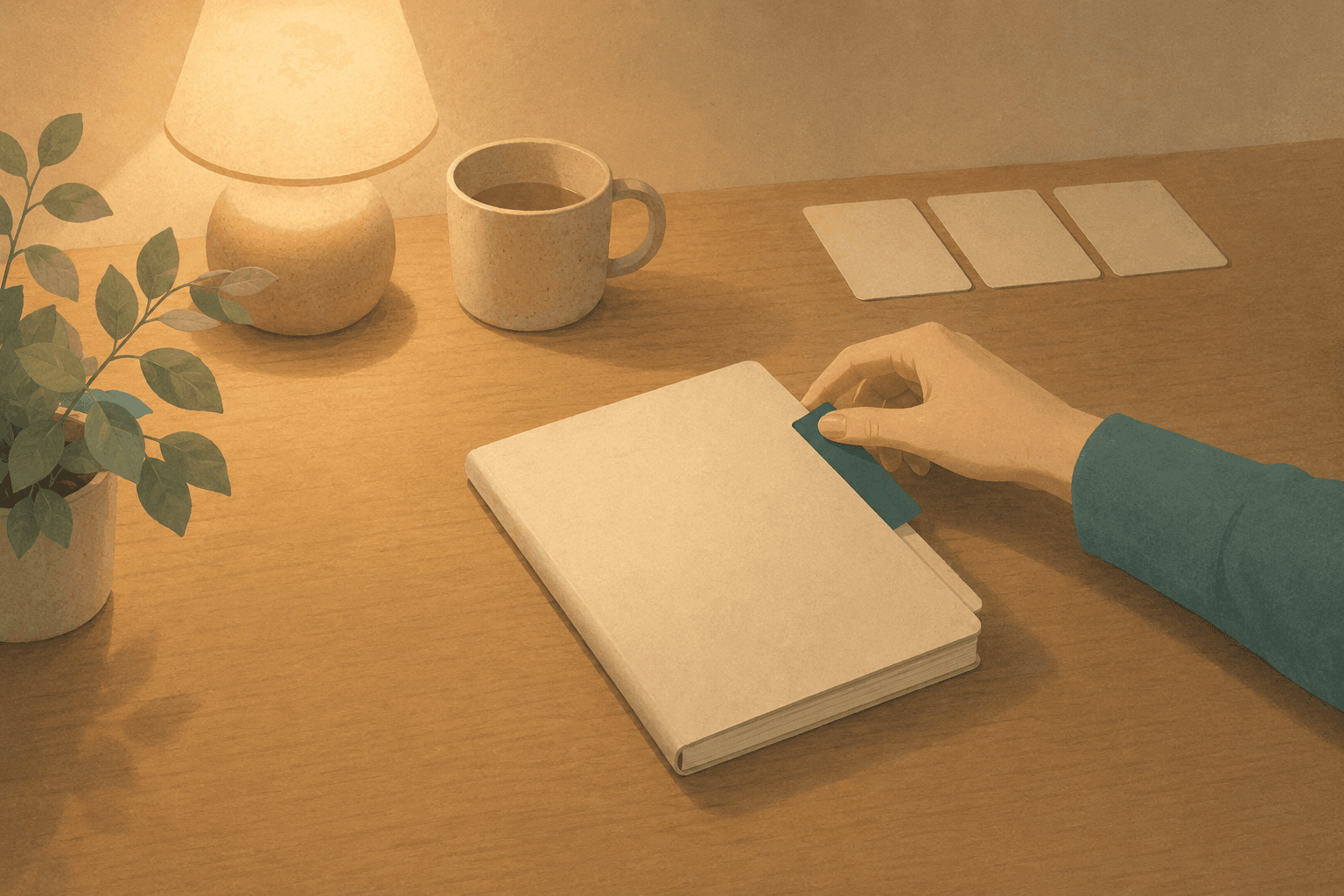
The evening doesn't punish effort. It punishes open questions.
It isn't the work, it's the open question
Two hours of renaming files and two hours of deciding whether to take on a project are not the same event, and you already know which one you're still holding when the light goes off. Effort doesn't explain the difference — the file-renaming may well have been the longer slog. What explains it: one of them ended, and the other one didn't, and what makes the second one unfinished has nothing to do with the hours left in it. The question is still sitting there with no answer attached, and you are the only place it can be kept.
Sleep researchers arrived at the same distinction from the other direction, and had to make it explicit to get anywhere. When Syrek and colleagues traced unfinished work through to sleep quality, they separated two kinds of after-hours thinking that look identical from outside. Affective rumination is turning something over emotionally: the same concern, circling, with no procedure for resolving it. Problem-solving pondering is working on it — considering, planning, arriving somewhere. Both keep the job in your head after you've left it. Only the first showed up as the path from unfinished tasks to impaired sleep; the second, if anything, pointed the other way (Syrek et al., 2017).
That quietly contradicts the usual instruction. If thinking about work at night were the problem, the remedy would be to stop thinking — which nobody can do on command; trying not to think about a thing is itself a way of thinking about it. But what costs you the night is circling, not thinking. And circling is what a mind does when it's been handed something it can't act on: a question that matters, with no answer available and nowhere to put it until morning.
The research doesn't sort work by type — that part is yours. What it establishes is the thing that makes sorting worth doing: leftover thinking isn't all one substance, and it isn't all equally expensive. So the leftover work that produces it shouldn't be treated as one substance either.
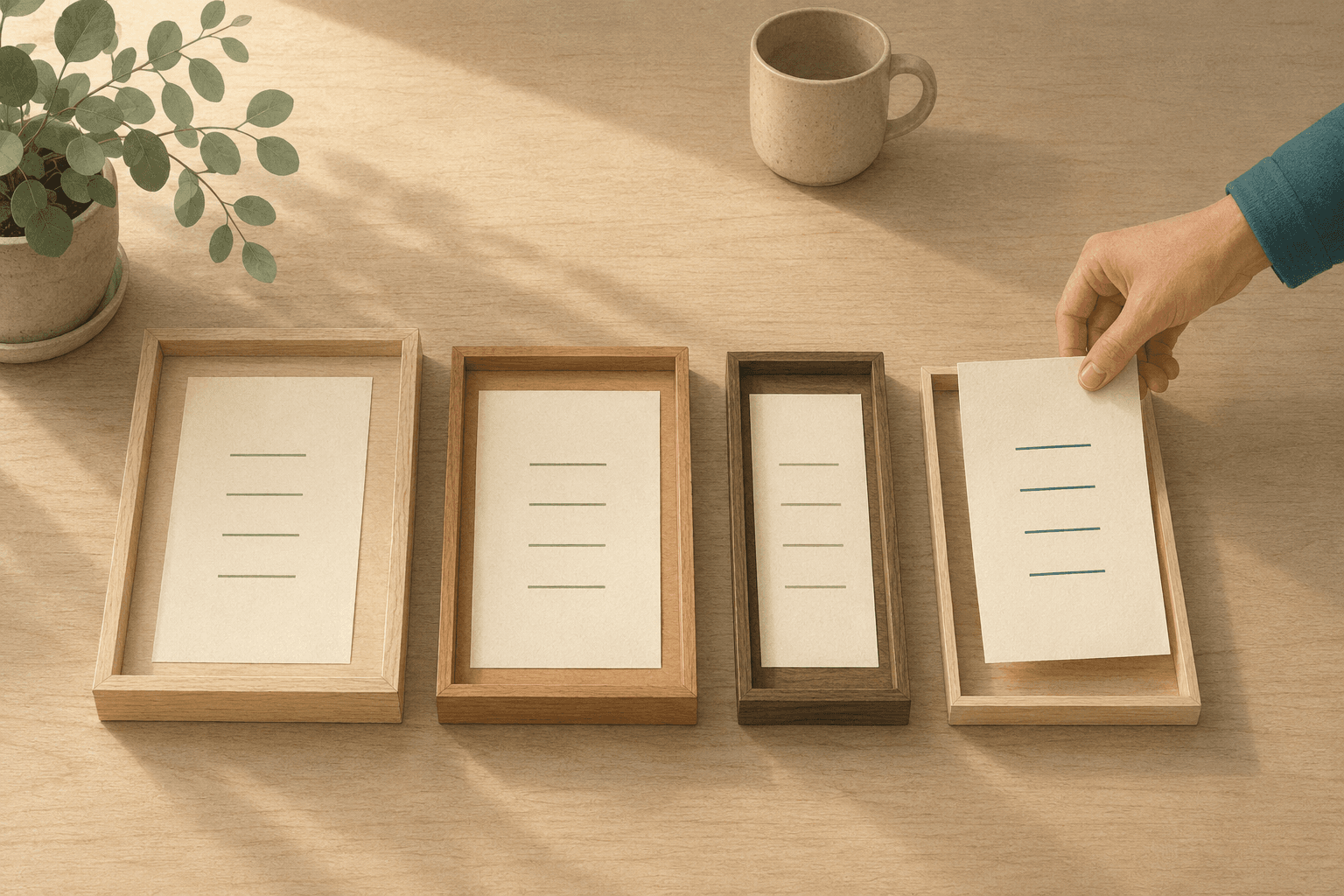
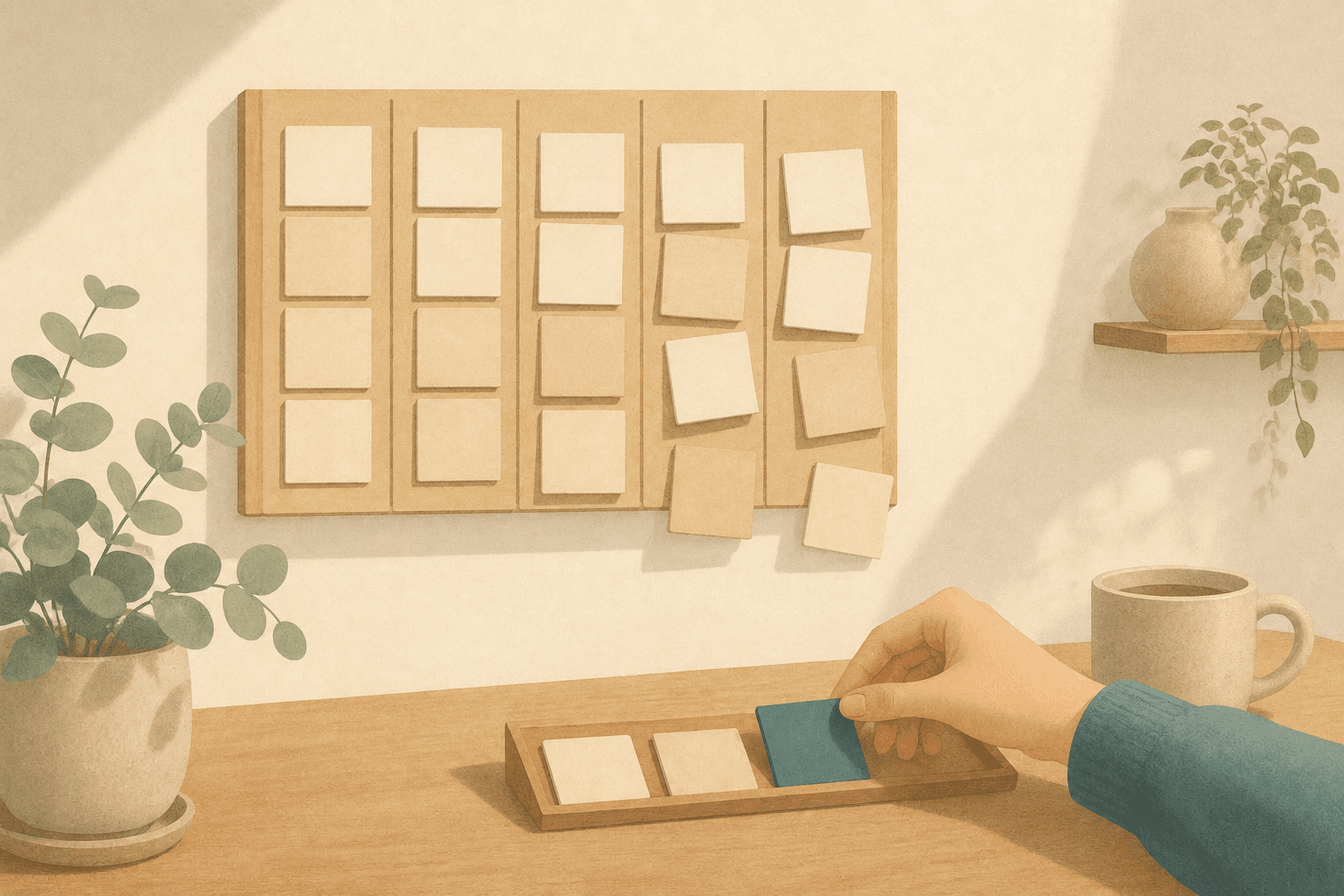
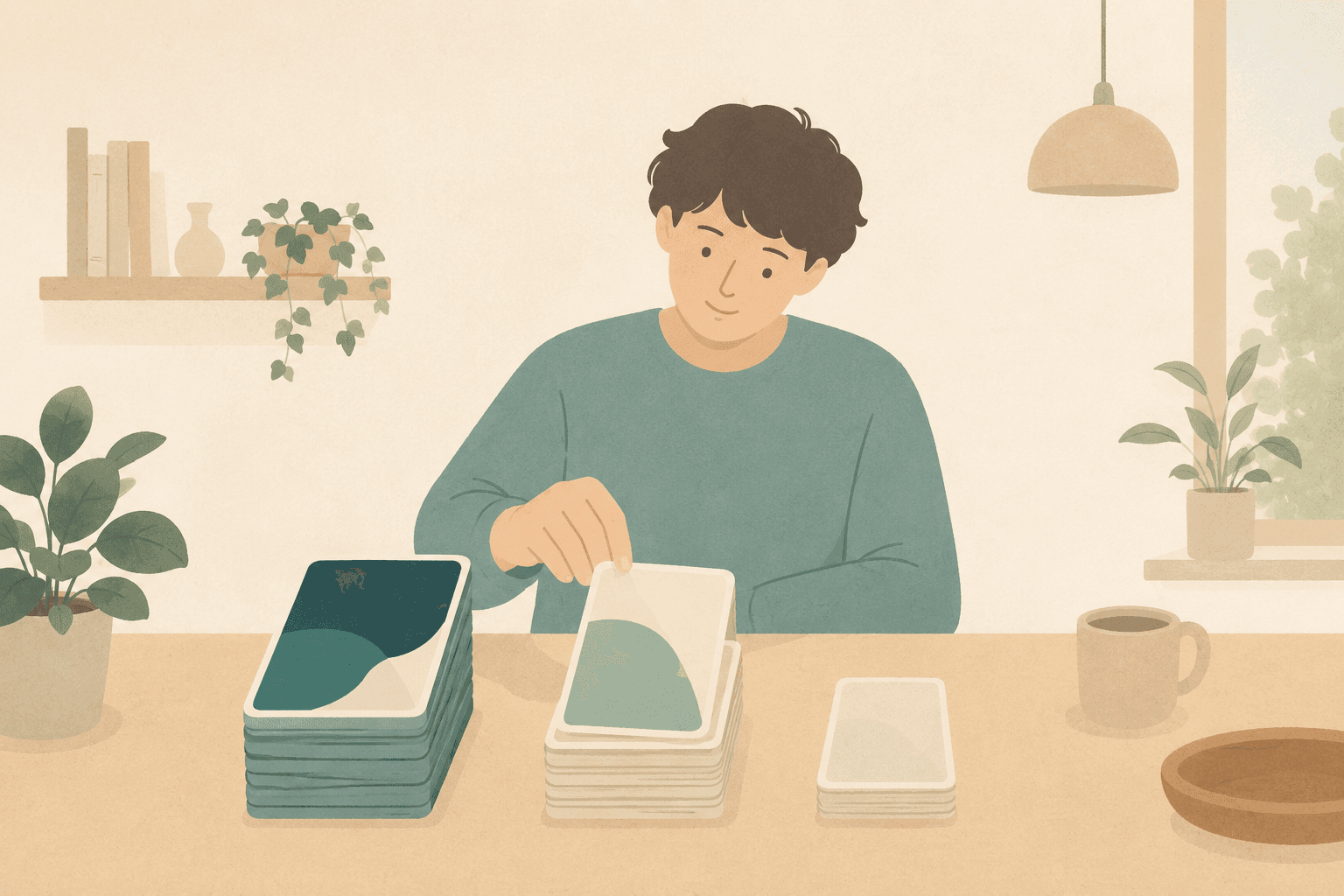
Sort your tasks by the kind of attention they ask for — the second axis of energy-based task management, the one that names what a task wants rather than what you have — and the evening gets much easier to fill.
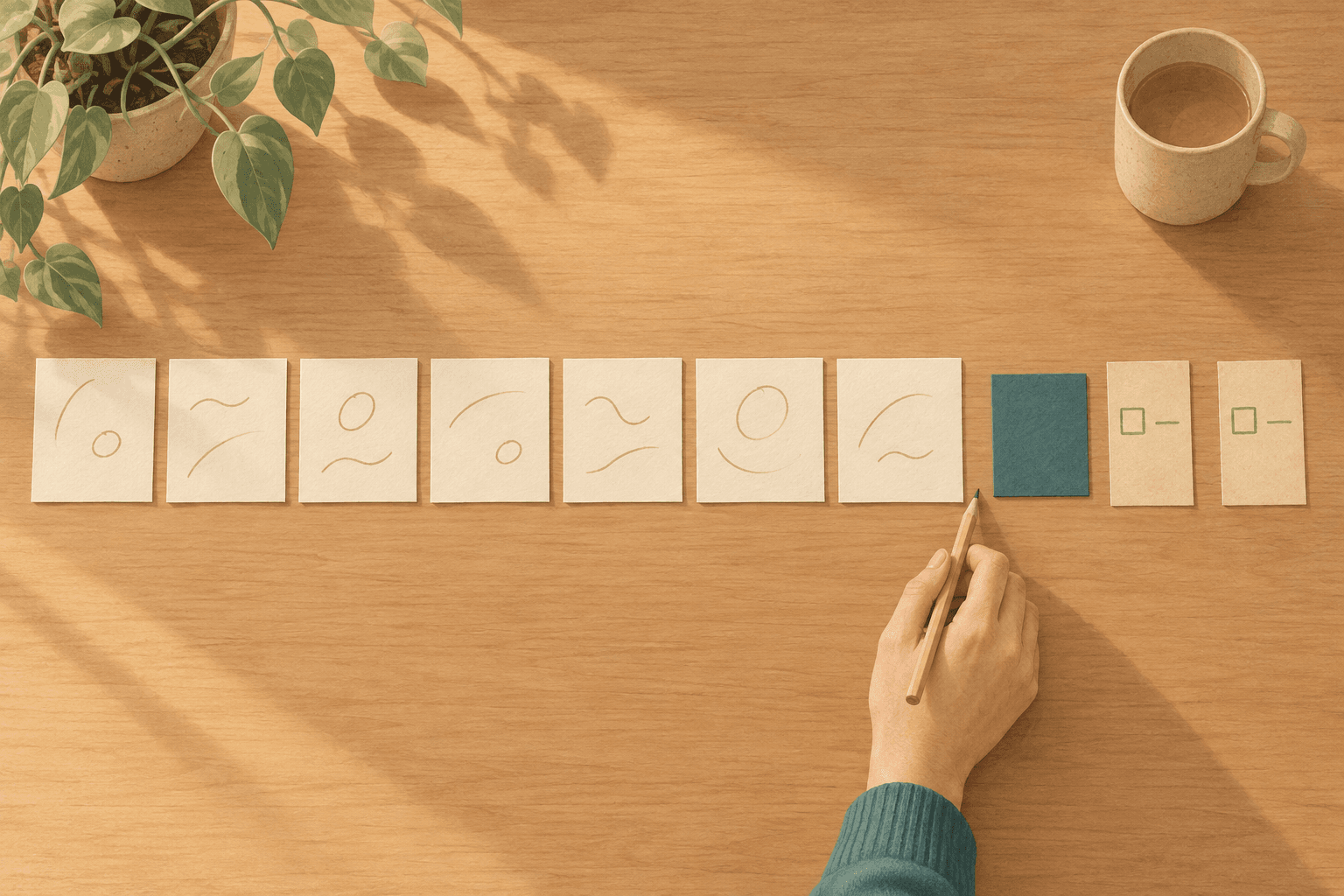
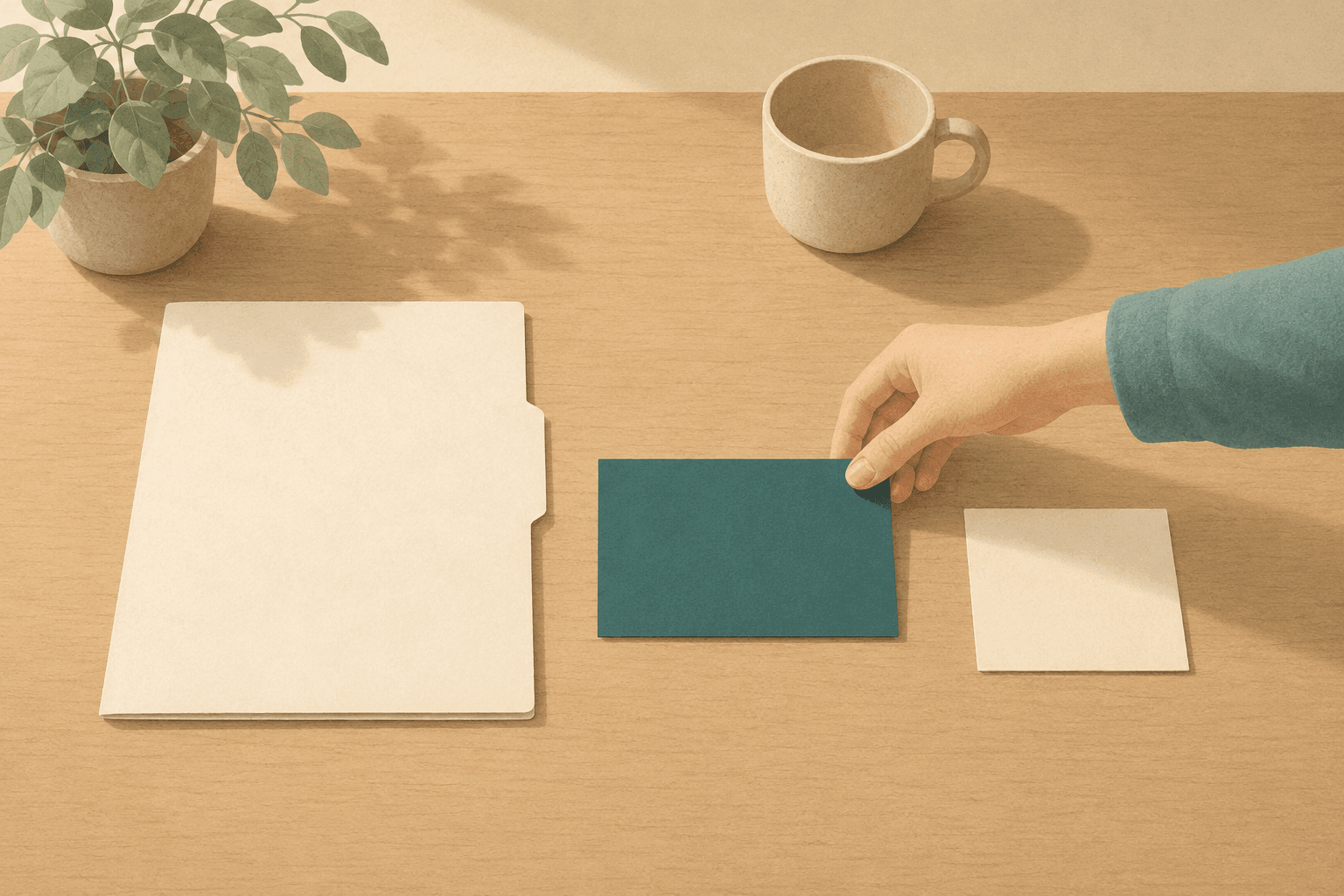
- Thinking work leaves a question open by default. Judgment, analysis, review, choosing between two options: what it produces is a decision, so stopping before the decision exists leaves the task not merely unfinished but unresolved — a different and more expensive state. An unmade decision is prime material for affective rumination. This is the work that follows you upstairs.
- Creative work usually leaves momentum rather than a question. Stop mid-flow on writing or design and your mind isn't stuck on an unanswerable problem — it's running ahead on a solvable one, the way a story keeps writing itself after the notebook closes. (When creative work does leave a question — is this any good? — that's judgment wearing creative clothes, and it belongs in the first category.) That can keep you up too, but it takes a different fix: not an earlier bedtime, but an ending your mind accepts as one — a seam, in the next section's terms: a stopping place the work itself provides.
- Plain Work — filing, cleanup, data entry, renaming that folder of terribly named files — ends where your hands stop. No question is embedded in it, so nothing is left over to circle. It's the least interesting work you own, and for this single purpose the safest thing you can pick up: the only kind whose ending is built into the doing.
Three kinds of leftover, and only one of them is a question. Which is why the useful thing to ask at the end of an evening isn't how much you worked. It's what you left unanswered.
How to choose what the evening gets
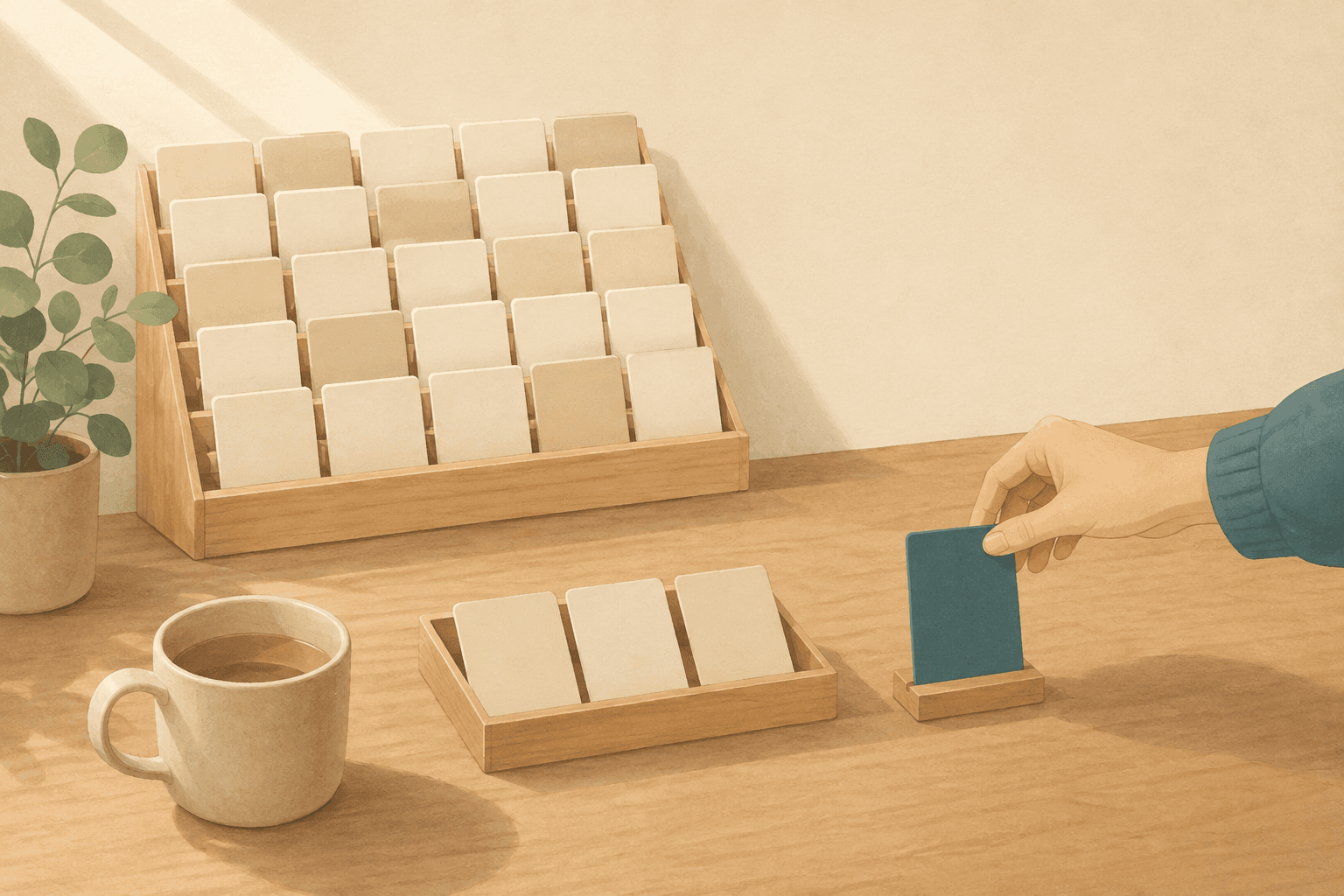
Choosing what the evening gets comes down to four decisions. None of them need an app, and none of them ask you to work less.
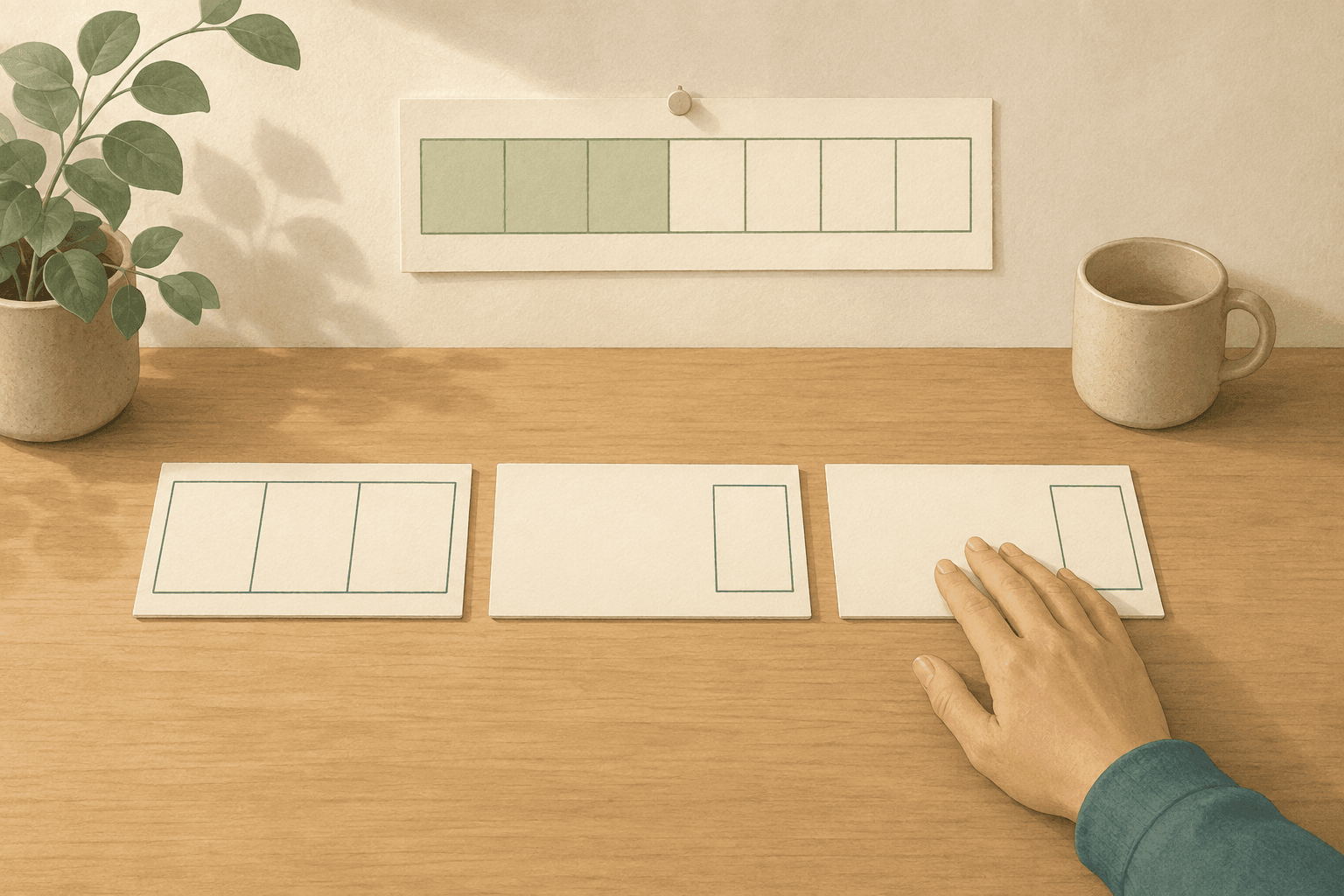
- Decide where you'll stop, not when. A clock-based stopping point lands wherever it happens to land, usually the middle of something — the worst available place to stop: mid-thought, mid-section, with the most threads left hanging. A stopping point set by the work lands at a seam instead: the section drafted, the files renamed. Same hours, a different amount handed to the night.
- Put the judgment call at the front of the session, not the end. If something has to be decided tonight, decide it first. A decision made early has the rest of the session to settle into — you act on it, nothing terrible happens, it stops being live. A decision made last has nowhere to go except to bed with you. And a decision that can't be acted on tonight at all — the quote that shouldn't be sent at this hour — belongs to the next rule: give it a destination, not an answer.
- Give what's left a destination, not an answer. You don't have to finish anything. Write down where you stopped and what the next move is, and the open loop has somewhere to be other than your head. One line is plenty — a handle for tomorrow, not tomorrow's plan, which is only a fresh stack of decisions at the hour you can least afford them.
- Let the last stretch be the work that closes. Every backlog has some: the receipts, the inbox, the folder of files with terrible names. It's a poor use of a sharp morning and a good use of a tired evening — and it hands the session an ending that arrives on its own, rather than one you have to decide on.
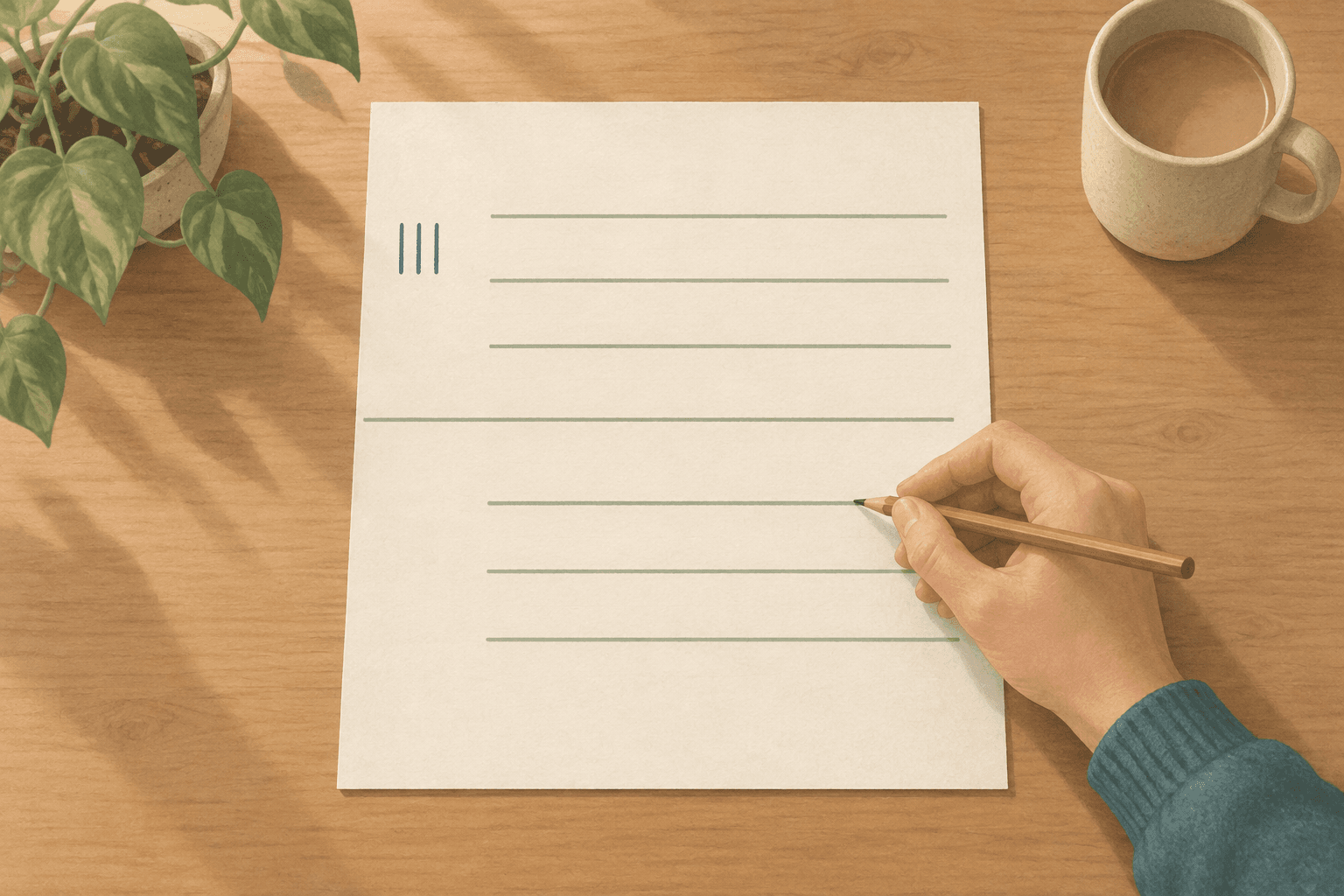
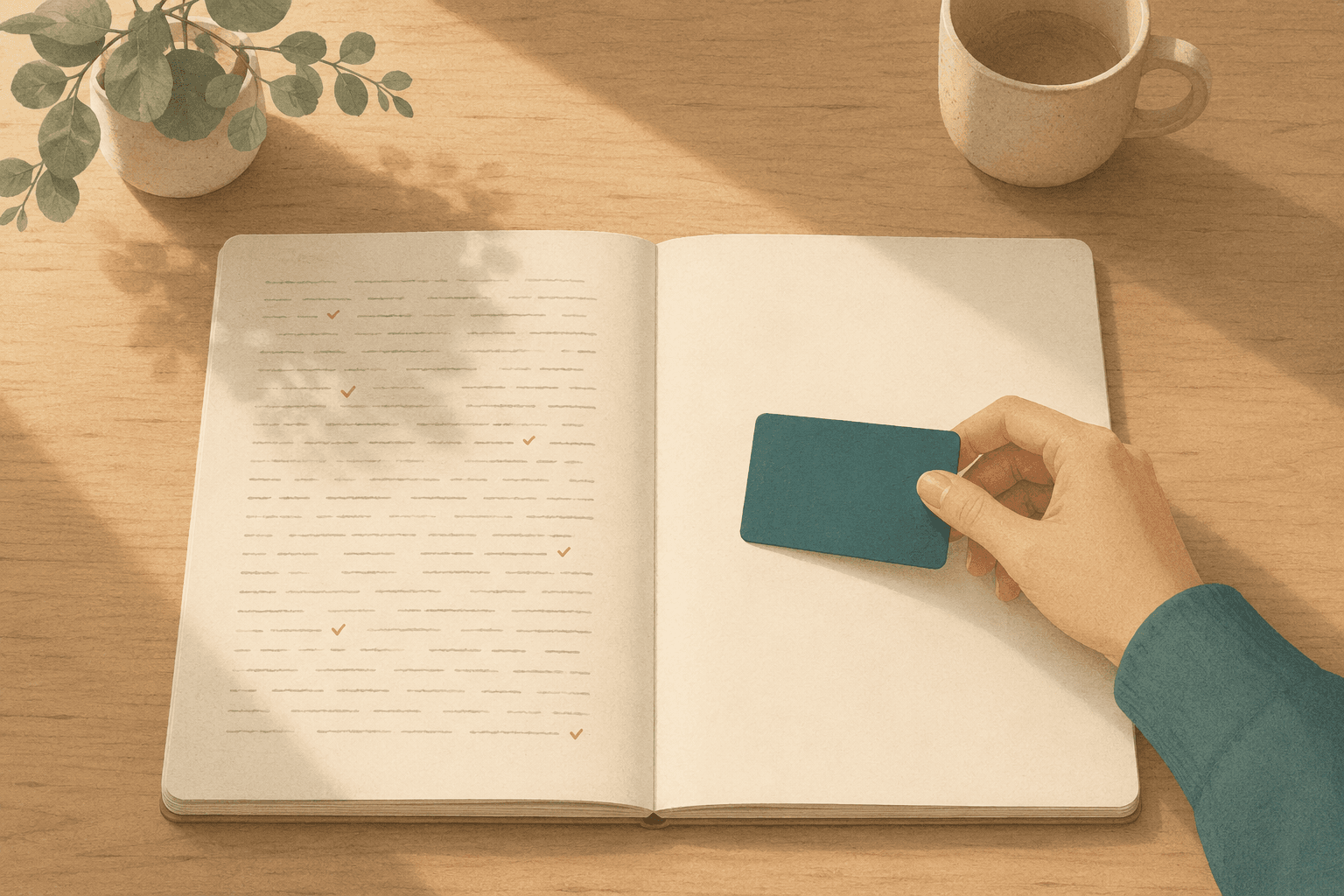
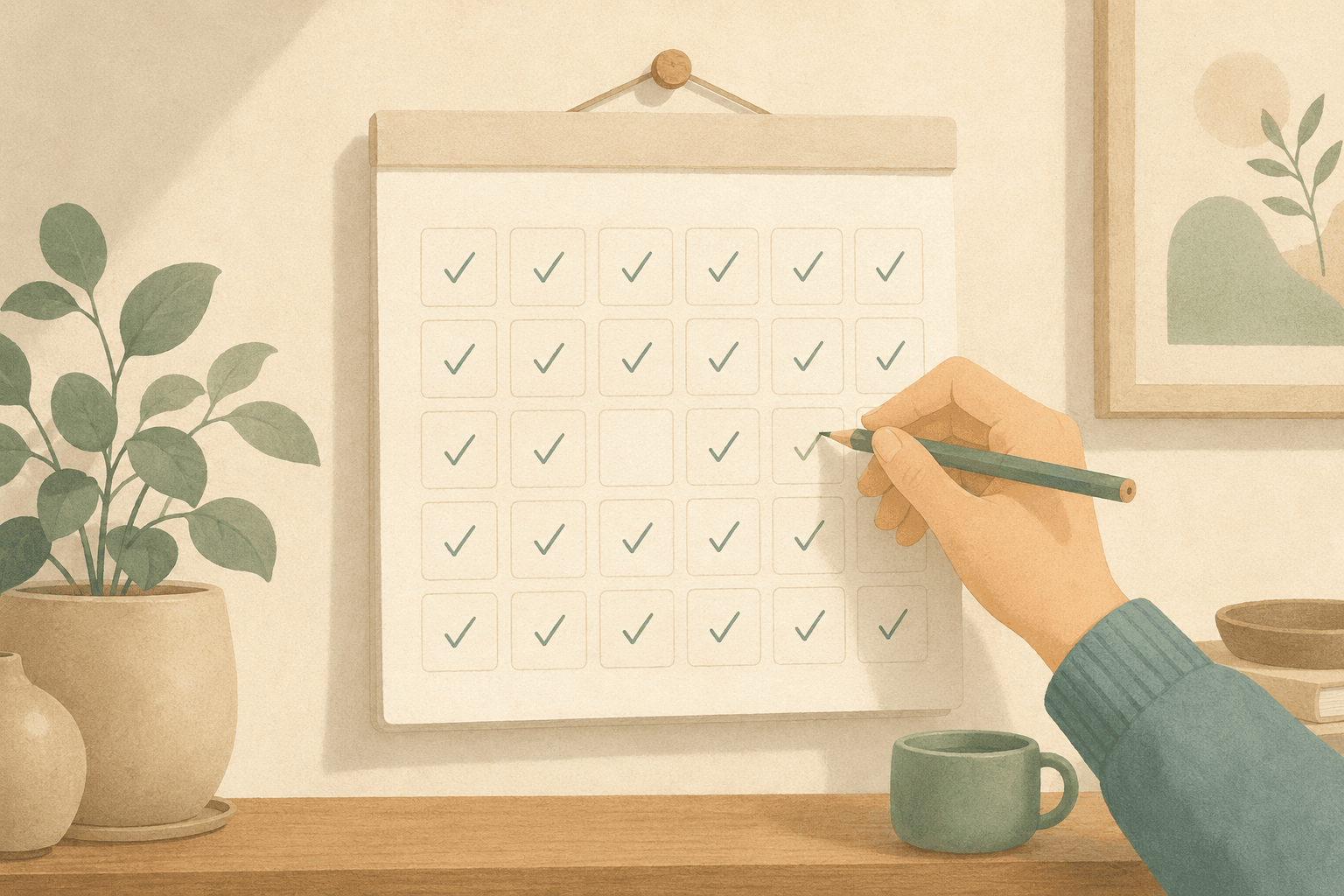
On paper the whole method fits on one page — a few lines, most nights. Before you start, write the seam you intend to stop at. When you reach it, write one line about where to pick up. Then close the notebook — which is, physically, the thing you're trying to do in your head.
"But the evening is the only time I get"
Then keep the evening. Nothing above asks for your hours back; it asks you to change the order things go in, which costs nothing and can be done tonight.
The order needs no clock: decisions first, while there's session left for them to close in; creative work in the middle, seam picked in advance; the closing kind last, because its ending is guaranteed. Nothing has been removed from the evening — what changed is which piece is still open when you stand up.
Some nights that won't be available. The decision arrives at the end because that's when the email came, or the creative work refuses to reach a seam, or the day was long enough that the session turns out to be mostly staring. On those nights the single line at the bottom of the page is the entire practice, and it works more often than it sounds like it should — because the goal was never to resolve the thing. It was to stop it from being the only place your attention is allowed to go.
What you couldn't place tonight doesn't have to stay in your head as a live question either. It can go somewhere deliberate and wait, which is a different status from abandoned: there is a real difference between work you aren't doing tonight and work you've given up on.
And on the nights when none of this is possible, the honest answer is that this particular evening's work can wait. Your hours matter — and sleep, unlike the task, doesn't reschedule well.
None of this asks you to treat the evening as a dead zone — hours you're only permitted to fill with rest, guilt, or a screen. It isn't one. It's a part of the day with a particular shape: bad at holding open questions, good at finishing things. Which means the honest version of "don't work before bed" was never about the working at all. It was about what you were still carrying when you stopped.
Frequently asked questions
What about a call or a session with someone else in the evening?
Other people set the ending for you, which removes the choice about where to stop — and calls usually end at a decision, because deciding is what they produce. Treat it as judgment work: get the deciding done inside the call rather than after it, and note where things stand before you close the laptop.
What if I don't get to choose what the evening holds?
The order is still yours even when the contents aren't. Within an hour of assigned work there is usually a choice about which part to leave for tomorrow, and leaving the piece that ends cleanly is worse than leaving the piece that ends at a question. Spend the last stretch on whichever part closes.
Does this apply to reading or studying?
Reading to find something out ends when you stop. Reading in order to decide something leaves the decision open, and an open decision is what costs you the night. Study that finishes a section closes; study that stops mid-problem leaves a solvable thing running, so pick the stopping place before you start rather than reading until you're tired.
What if the next stopping place is hours away?
Then the seams are too far apart to be useful and it's worth making a smaller one. Most work that looks seamless has intermediate places you could stop and still say what state it's in: a section outlined, one file done. Choosing that in advance is the difference between stopping and being stopped by tiredness.