Habit Trackers Fail Because Misses Pile Up
Published · Updated · Canvas Tasks
Thirty-four days into a streak, you miss one. The next morning the app shows a zero where the number used to be — and something in you quietly files the whole habit under broken. You know one rest day shouldn't erase five weeks of showing up. The counter disagrees.
What happens next is rarely a comeback. The tracker becomes slightly unpleasant to open, so you open it less; unchecked days pile up behind you; eventually the app gets deleted, and a new one gets installed a few months later — a cycle familiar enough that people describe swapping productivity apps as often as underwear, abandoning each one with guilt (Zapier). Habit advice usually blames discipline. But a system that one bad Tuesday can total isn't a discipline problem: a small slip flips people into all-or-nothing thinking, where the plan is either intact or worthless (idea Lane).
The problem isn't the missed day. It's what the tracker does with it.
Habit trackers rarely fail because you lack discipline. They fail because of how they treat a single miss: a streak counter turns one skipped day into a total loss, and a backlog of unchecked days turns it into visible debt. Psychologists call what happens next the what-the-hell effect — once the record feels broken, giving up entirely seems to cost nothing extra. The fix isn't more willpower. It's a tracker where a missed day costs exactly one day.

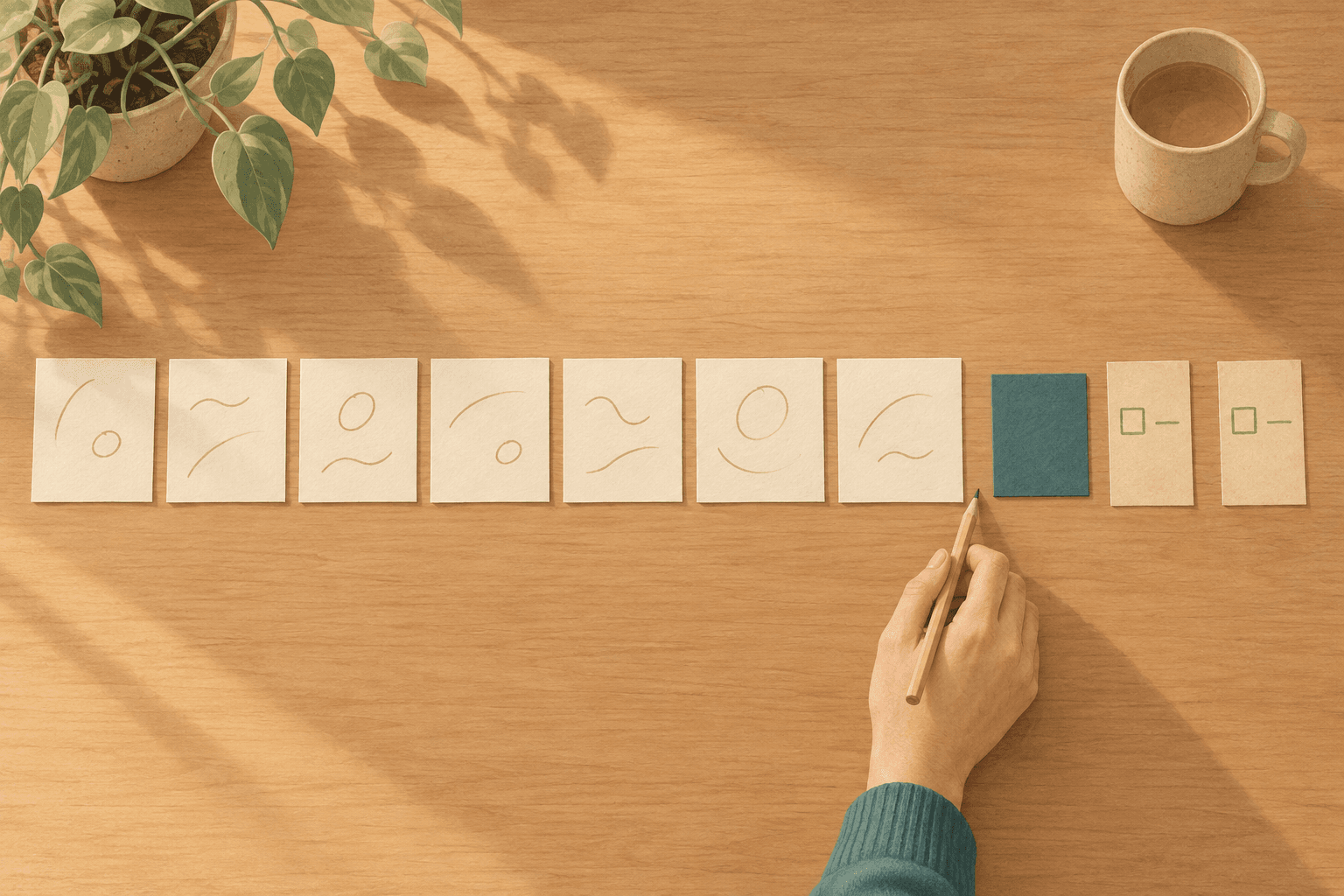
One blank day is one blank day — not a broken record.
One missed day shouldn't cost you the record
A streak doesn't measure your habit. It measures your habit's continuity — which sounds like the same thing until the day it isn't. Do a habit a hundred times in a hundred and one days, and the streak reports only the days since your last miss — zero, if the miss was yesterday. Everything you actually did is still true, but the interface has marked it worthless. That isn't a neutral display choice. It's all-or-nothing thinking, implemented as UI.
Dieting researchers Janet Polivy and C. Peter Herman gave a name to what a "broken" goal does to people: the what-the-hell effect (overview). In their studies, dieters who believed they'd already blown their diet didn't get back on track — they ate more, because once the boundary felt broken, further slips seemed free. A streak reset engineers that exact moment into your habit: the record is gone, day zero and day one feel the same, so — what the hell.
To be fair, streaks do work — while they're alive. Watching a number grow is genuinely motivating — people log habits at 11:58 p.m. just to keep a counter alive. But even the gamification industry, which celebrates what streaks do for short-term engagement, concedes that most of them never compound into a lasting habit (Plotline). The design has power on the way up and no answer for the way down. And every habit, eventually, has a down day.
Missing one day should cost you one day. A streak makes it cost the entire record — and that accounting error is what turns one missed workout into a quit habit.
How to track habits without the guilt machinery
You can keep the tracking and drop the guilt. Four principles, none of which need an app.
- Count today, not chains. Record whether you did the thing today, and display nothing a missed day can destroy. What you did last month stays done no matter what happens this week — past effort is an asset, not collateral.
- Let missed days stay silent. No red badges, no backlog of unchecked boxes, no "catch up" mechanics. Yesterday closes when it ends (correcting a day you did but forgot to log is fine; filling in a day you didn't do is not). Today always starts blank, and blank is a starting line, not a debt.
- Anchor habits to parts of the day, not clock times. A 7:00 notification fires regardless of what you're doing at 7:00, and each badly timed buzz makes dismissing easier — until dismissing is all it trains. Attach each habit to a band of the day instead — morning, daytime, evening, before bed — and anchor the glance to something you already do: the morning coffee, sitting down at the desk, brushing your teeth. The day itself becomes the reminder.
- Retire habits without erasing them. Habits have seasons. If quitting a habit deletes its history, quitting feels like failure, so dead habits linger and clutter the list. When the record survives retirement, stopping is just another finished decision.
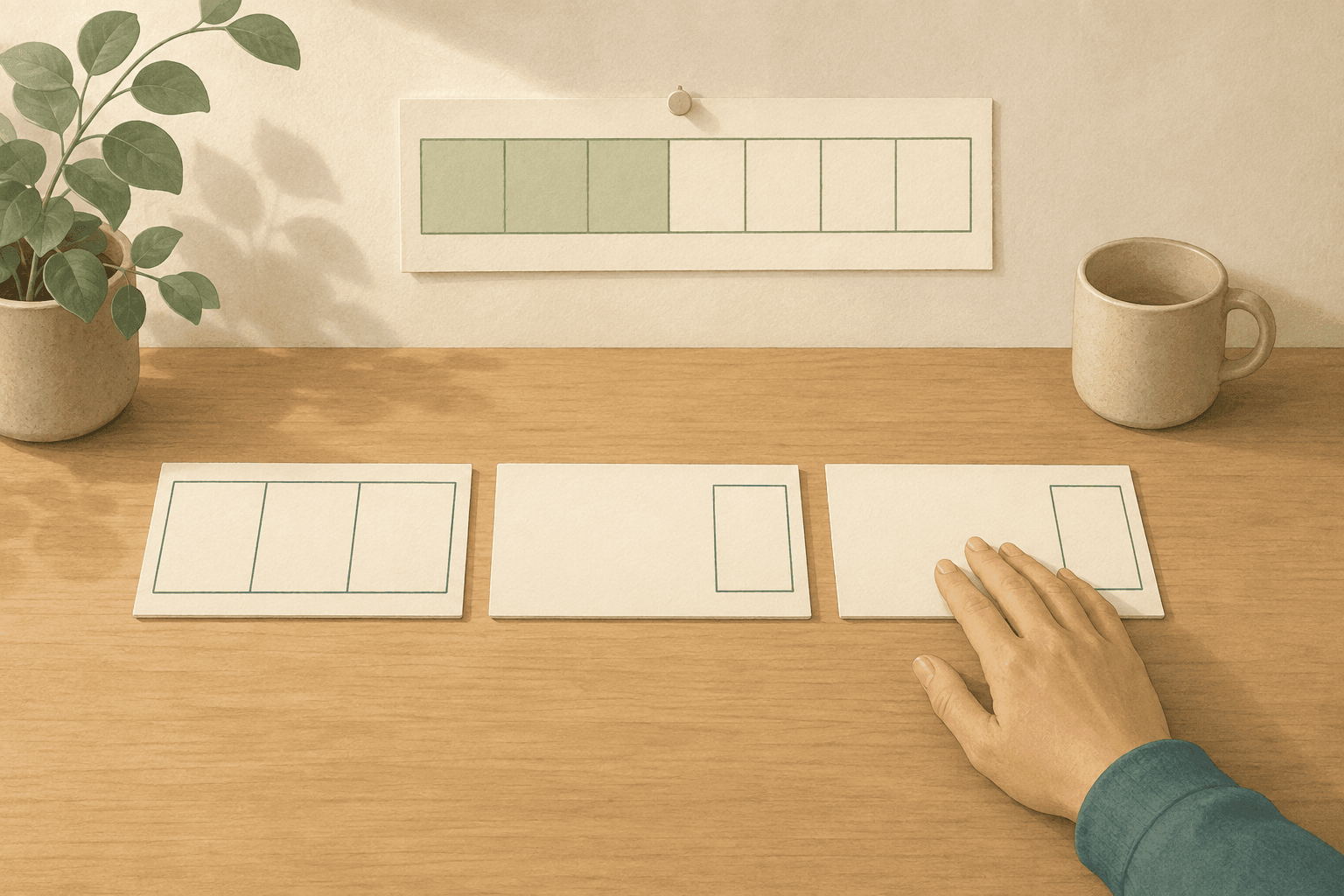
With a notebook, this is a page per day divided into four bands, checked as you go — and one rule that matters more than the layout: never backfill a day you didn't do.
"But the streak is what keeps me going"
The streak probably is what keeps you going. That's the trap. Streak motivation is borrowed against the fear of losing the record, and it works — right up until the day the record is lost, when the same force flips sign and pushes you out of the habit entirely.
There are motivators that don't invert. The quiet win of ticking three of the four habits you planned today. A history that nothing can delete. A restart that costs nothing, because there's nothing to rebuild.
With nothing to rebuild, the comeback protocol is short. When you miss a day — or a week — charge yourself exactly what you missed, which is nothing extra. Don't backfill checkmarks to fake continuity. Restart with the smallest version of the habit, in its usual part of the day. If the miss came from a rough stretch, pick your way back in by what fits your current energy rather than by what the plan says you owe. And count nothing. There's no number to rebuild. That's the point.
How Canvas Tasks puts this into practice
This is where Canvas Tasks comes in. Routines are built around exactly that one-day accounting. Habits live on the Today home: four time-of-day columns — Morning, Daytime, Evening, Before bed — with small checkable items under each. Every day's checks are their own record. The only number on screen is today's count of routines done. There's no streak counter on routines and no reminders — and missed days are never added up anywhere, on the day or in a chart. The design goal is exactly that: missed days don't pile up, so a habit never becomes a mountain of guilt.
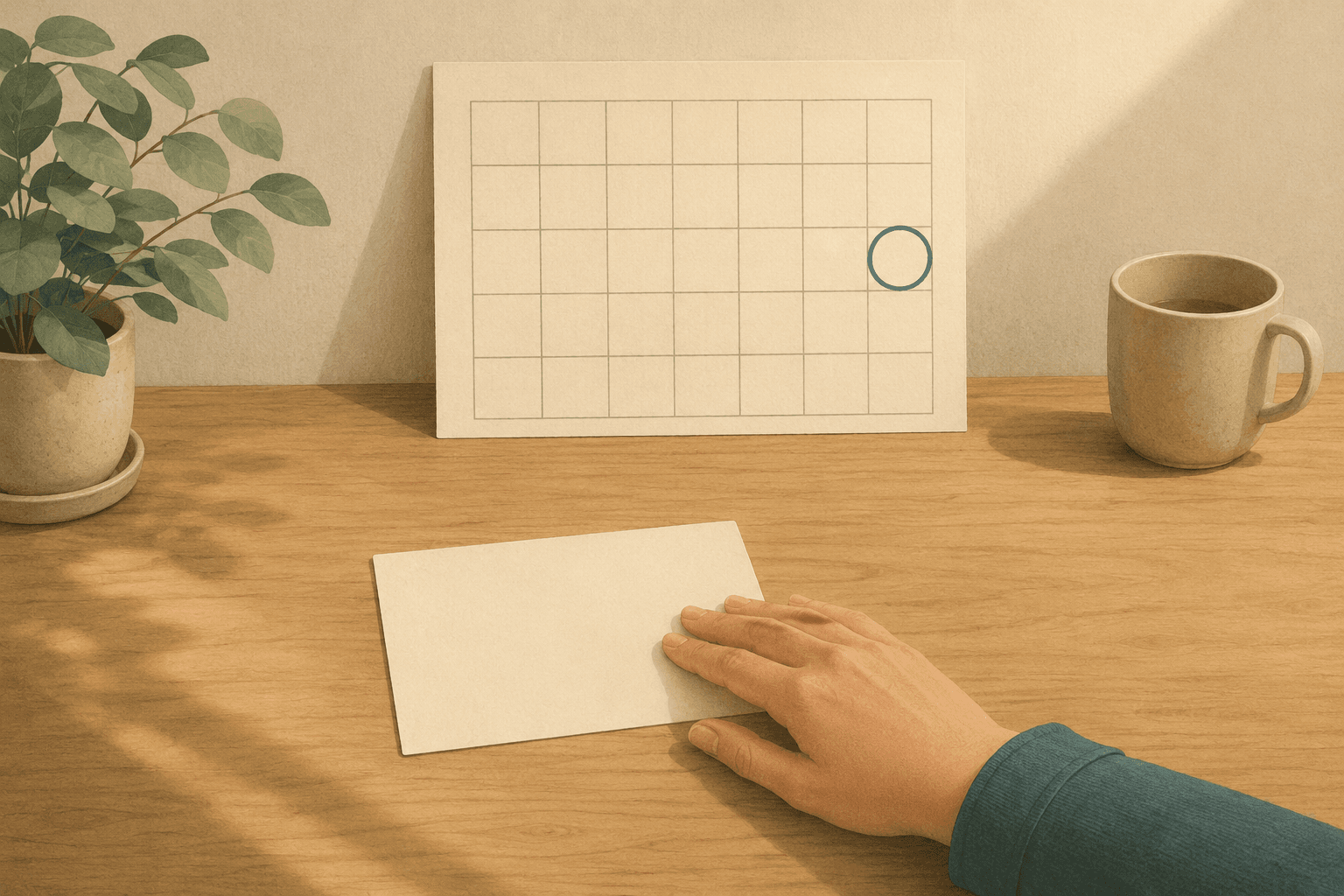
The history works in both directions. Did the thing on Tuesday but forgot to log it? Open Tuesday and check it — that's fixing the record, not backfilling a day you skipped. Retire a habit, and it stops turning up on the days ahead, while every day it lived keeps showing what you actually did — quitting doesn't cost you the record either. Add a new habit, and it starts from the day you add it — never earlier — with no trail of freshly minted empty boxes stretching back through your past.

Four parts of the day, one day at a time. The only number on screen is today's.
Two honest caveats. Routines are daily while active — there's no weekday scheduling — so they fit "every day, roughly around then" habits best. And the free plan caps you at five routines in total (Pro removes the cap) — a deliberately small number, because a list of habits you actually mean is short.
Frequently asked questions
How many habits can I track at once without it falling apart?
Start with fewer than feels satisfying to set up, and add only when the current set has become boring. The limit isn't memory, it's how many small decisions a morning can absorb before the list turns into something to get through. Once it feels like a queue, the ones you care least about are deciding whether you open it at all.
What about a habit I only want to do three times a week?
Put it in a part of the day and check it on the days you do it. A day you deliberately skipped isn't a miss, and nothing needs to know your intended frequency for that to hold. Encoding "three times a week" into the tool mostly buys you a tool that can now tell you when you're short.
If nothing is counted, how do I know the habit is sticking?
Read the record instead of a score. A month of days with most of them checked answers the question better than a number that resets. The test worth applying is whether the thing still happens in a week you weren't thinking about it — which no counter measures, and which a history you can scroll makes visible.
Is a habit different from a task I keep putting off?
Yes, and mixing the two is what makes a list heavy. A habit is something you want to keep happening and never finishes; a task ends. Anything that ends belongs where finishing it removes it. Anything recurring belongs somewhere that only ever asks about today, so an untouched week leaves nothing behind.